Reduce performance gaps, align strategy and execution, accelerate new employee autonomy

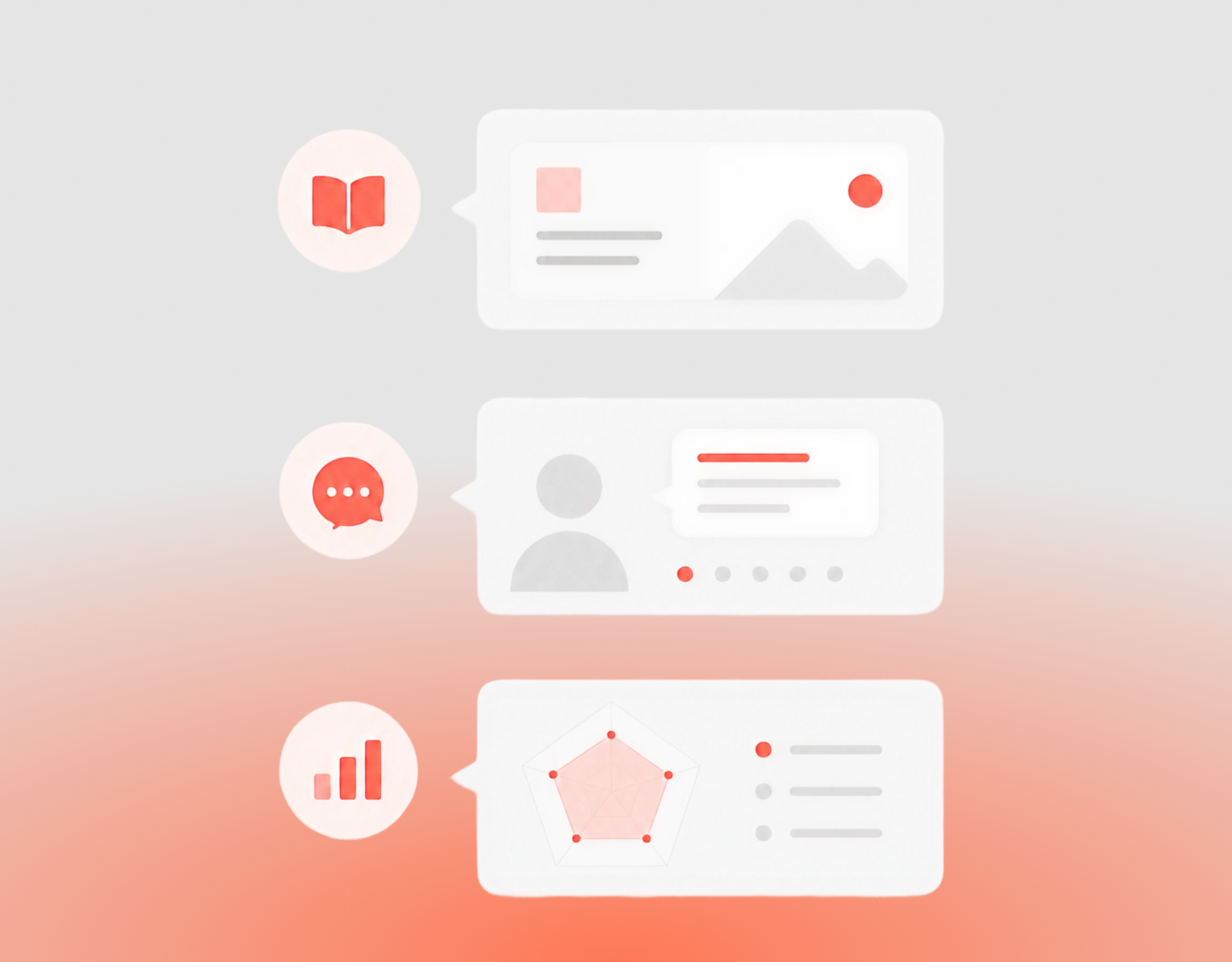
Increase Knowledge Retention
Replace passive content consumption with active participation and repetition.


Accelerate Skill Development
Help employees build confidence and competence faster through guided practice.

Personalize Learning at Scale
Deliver the right content, exercises, and coaching to each learner.

Measure Real Progress
Track completion, skill acquisition, certifications, and performance improvement.
Onboarding-Reisen, die auf Ihre Herausforderungen vor Ort zugeschnitten sind.
Industrie
Beschleunigen Sie die Entwicklung von Fähigkeiten für komplexe und technische Produkte.
Entdecke
Versicherung
Optimieren Sie die Bearbeitung von Einwänden und den Verkauf regulierter Produkte unter vollständiger Einhaltung der Vorschriften.
Entdecke
Finanzen
Stellen Sie die Einhaltung gesetzlicher Vorschriften sicher und verbessern Sie gleichzeitig die Beratungsqualität.
Entdecke
Maßgeschneiderte Lösungen für jede Branche
Jede Branche hat ihre Herausforderungen, muchbetter.ai passt sich allen an.





.png)

.png)






Sie haben ihr Onboarding verändert
Greifbare Ergebnisse innerhalb der ersten Wochen
Gesundheitswesen
Schulen Sie Teams in Bezug auf wissenschaftliches Fachwissen und Kommunikation mit medizinischem Fachpersonal.
Entdecke
Telekommunikation
Verbessern Sie die Kundenbeziehungen und reduzieren Sie die Kundenabwanderung durch reibungslosere Interaktionen.
Entdecke
Einzelhandel
Schulen Sie Vertriebsteams, um Kunden besser zu beraten und die Konversionsraten in Geschäften zu erhöhen.
Entdecke
An AI sales training platform helps sales teams improve skills through guided practice, feedback, and repeatable training workflows. Instead of relying only on theory, reps can train with realistic scenarios, get coaching recommendations, and track progress over time. The goal is faster onboarding, stronger messaging, and better performance in real customer conversations.
Most AI sales training platforms combine structured learning paths with interactive practice. Reps train with scenarios (discovery, objections, demos), receive feedback on what to improve, and managers can monitor readiness with scorecards. The platform typically supports onboarding, continuous coaching, and certification gates to validate skills before reps go live.
It’s designed for sales leaders, enablement, and L&D teams who want consistent training at scale. It’s also useful for SDRs, AEs, and customer-facing teams that need to ramp quickly, practice messaging, and improve performance without depending solely on ad-hoc manager time.
AI sales training isn’t a replacement for managers, it’s a way to standardize and scale practice. Traditional training often focuses on content (slides, playbooks). An AI sales training platform adds structured repetition, feedback loops, and measurable progress, helping teams move from knowledge to real execution faster.
Common use cases include discovery calls, objection handling, qualification, negotiation, demo delivery, and follow-up messaging. Many teams also use AI training for onboarding, product updates, new pitch rollouts, and role-specific readiness (SDR vs AE). The best platforms support continuous improvement, not one-off workshops.
Yes. A strong AI sales training platform accelerates onboarding by giving reps clear weekly milestones, guided practice, and certification gates. This helps reduce time-to-first-meeting and time-to-first-opportunity, while giving managers visibility into readiness, so coaching is targeted instead of generic.
ROI is typically measured through ramp time reduction, improved conversion rates, higher win rates, shorter sales cycles, and better call quality. Many teams also track training completion, certification scores, and manager coaching hours saved. The most important metric is consistent performance improvement across the team, not just top reps.
No. It supports managers by automating practice routines and surfacing clear coaching signals. Managers stay focused on strategy, deal coaching, and real performance conversations, while the platform helps reps build skills through repeatable training and feedback between 1:1 sessions.
Look for realistic practice scenarios, clear feedback that reps can act on, manager dashboards, onboarding workflows, and easy content updates for messaging changes. Also check how the platform supports certification and continuous training, not just one-time sessions. Adoption is usually driven by simplicity and time-to-value.