customers-muchbetter-ai-coaching-sales

Trusted by 100+ teams worldwide

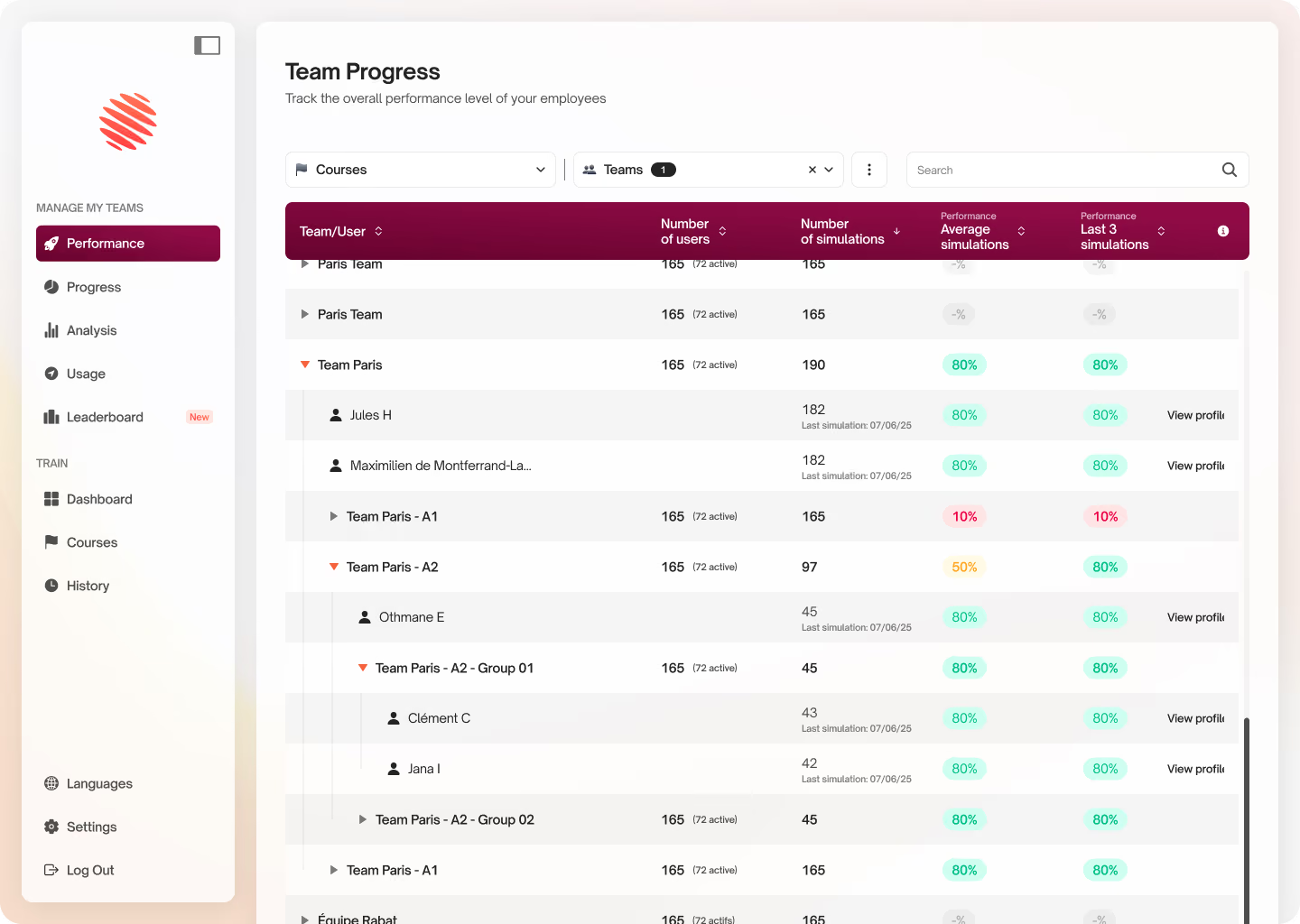
Build a living map of your team's capabilities

Automatically assess, map, and benchmark the competencies that drive sales success. Give managers a clear view of strengths, gaps, and coaching priorities across every team.

+25 langages
4.8/5
Security & Compliance
#1 Build Dynamic Skills Maps

Skills Intelligence

Create a living map of your organization's strengths and development areas. Visualize competencies across teams, roles, regions, and business units to identify capability gaps before they impact performance.
#2 Understand Individual Performance

Competency auto-evaluation

Automatically evaluate the skills that drive performance across simulations, certifications, and learning activities. Move beyond subjective evaluations and gain a reliable view of every employee's capabilities.
Dashboard screen showing user Antoine's progress with stats, skills radar, and bars for simulations.
#3 Benchmark & Track Progress

Deep dive analysis

Compare employees against peers, teams, target profiles, or top performers. Track skill progression over time and measure the impact of coaching, training, and enablement initiatives.

FAQ

What is an AI sales training platform?

An AI sales training platform helps sales teams improve skills through guided practice, feedback, and repeatable training workflows. Instead of relying only on theory, reps can train with realistic scenarios, get coaching recommendations, and track progress over time. The goal is faster onboarding, stronger messaging, and better performance in real customer conversations.

How does an AI sales training platform work?

Most AI sales training platforms combine structured learning paths with interactive practice. Reps train with scenarios (discovery, objections, demos), receive feedback on what to improve, and managers can monitor readiness with scorecards. The platform typically supports onboarding, continuous coaching, and certification gates to validate skills before reps go live.

Who is an AI sales training platform for?

It’s designed for sales leaders, enablement, and L&D teams who want consistent training at scale. It’s also useful for SDRs, AEs, and customer-facing teams that need to ramp quickly, practice messaging, and improve performance without depending solely on ad-hoc manager time.

Is AI sales training better than traditional sales training?

AI sales training isn’t a replacement for managers, it’s a way to standardize and scale practice. Traditional training often focuses on content (slides, playbooks). An AI sales training platform adds structured repetition, feedback loops, and measurable progress, helping teams move from knowledge to real execution faster.

What skills can we train on an AI sales training platform?

Common use cases include discovery calls, objection handling, qualification, negotiation, demo delivery, and follow-up messaging. Many teams also use AI training for onboarding, product updates, new pitch rollouts, and role-specific readiness (SDR vs AE). The best platforms support continuous improvement, not one-off workshops.

Can an AI sales training platform help with onboarding and ramp time?

Yes. A strong AI sales training platform accelerates onboarding by giving reps clear weekly milestones, guided practice, and certification gates. This helps reduce time-to-first-meeting and time-to-first-opportunity, while giving managers visibility into readiness, so coaching is targeted instead of generic.

How do we measure ROI from an AI sales training platform?

ROI is typically measured through ramp time reduction, improved conversion rates, higher win rates, shorter sales cycles, and better call quality. Many teams also track training completion, certification scores, and manager coaching hours saved. The most important metric is consistent performance improvement across the team, not just top reps.

Does an AI sales training platform replace sales managers or coaches?

No. It supports managers by automating practice routines and surfacing clear coaching signals. Managers stay focused on strategy, deal coaching, and real performance conversations, while the platform helps reps build skills through repeatable training and feedback between 1:1 sessions.

What should we look for when choosing an AI sales training platform?

Look for realistic practice scenarios, clear feedback that reps can act on, manager dashboards, onboarding workflows, and easy content updates for messaging changes. Also check how the platform supports certification and continuous training, not just one-time sessions. Adoption is usually driven by simplicity and time-to-value.